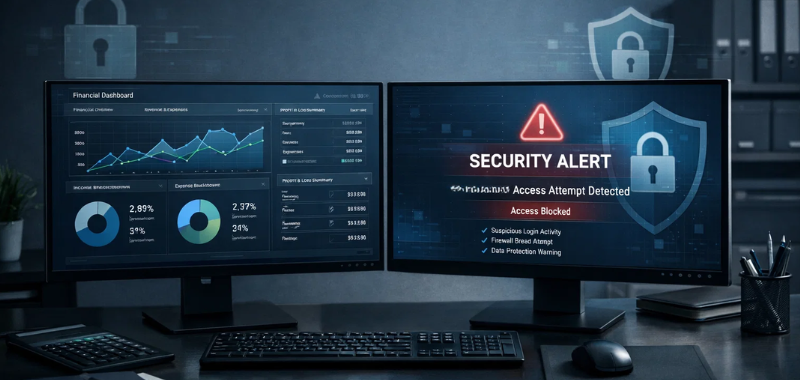

Cybersecurity is No Longer Optional—It’s Fundamental
- As accounting firms operating in Australia, we handle highly sensitive financial data
- With increasing digitalization, we face greater exposure to cyber risks
- Cyber threats today are targeted, sophisticated, and evolving
- The Australian Cyber Security Centre continues to highlight rising attacks on professional services
- Cybersecurity is not just an IT function—it is a core responsibility for all of us
A Realistic Scenario: When Trust is Exploited
- We receive an email appearing to be from a long-term client
- The request: update bank account details for upcoming payment
- The tone feels familiar, branding looks accurate, and urgency is implied
- Without independent verification, the change is processed
What follows:
- Funds are transferred to a fraudulent account
- The request turns out to be a phishing attack
- Financial loss occurs
- Client trust is impacted
Key takeaway:
Cyber incidents often arise from small decisions made under pressure
The Most Common Cyber Threats We Face
Phishing & Email Fraud
- Emails impersonating trusted clients or institutions
- Designed to create urgency and bypass verification
Credential Theft
- Weak or reused passwords leading to unauthorized access
Ransomware Attacks
- Critical firm data encrypted, disrupting operations
Cloud Security Risks
- Misconfigurations in platforms such as:
- Xero
- MYOB
- QuickBooks
Human Error
- The most common cause of breaches
- Often driven by workload, urgency, and assumptions
The Human Factor: Our First Line of Defence
- As professionals, we often work under:
- Tight deadlines
- High client expectations
- Continuous communication
- This environment can lead to:
- Quick decision-making
- Reduced verification
- Increased vulnerability
Cybercriminals target behaviour as much as systems
Practical Cybersecurity Actions We Must Adopt
1. “Verify Before We Act”
- We should always verify:
- Bank detail changes
- Payment instructions
- Use a secondary communication channel (e.g., phone confirmation)
2. Make Multi-Factor Authentication (MFA) Standard
- We must enable MFA across:
- Email systems
- Accounting platforms
- Internal tools
3. Treat Email with Caution
- We should not assume emails are secure
- Be alert to:
- Slight domain changes
- Unusual urgency
- Unexpected requests
- Avoid sharing sensitive financial data via email
4. Strengthen Password Practices
- We should use:
- Strong, unique passwords
- Password management tools
- Avoid reusing credentials across systems
5. Secure Our Cloud Accounting Systems
- Regularly review access in:
- Xero
- MYOB
- Apply role-based access controls
- Monitor login activity
6. Build Continuous Awareness
- We should:
- Conduct regular training sessions
- Run phishing simulations
- Encourage open reporting of mistakes
7. Maintain Reliable Data Backups
- We must:
- Back up data regularly
- Maintain secure offline copies
8. Be Prepared with an Incident Response Plan
- We should define:
- Roles and responsibilities
- Clear response steps
- Regular testing is essential
Cybersecurity as Our Professional Responsibility
- Our clients expect us to:
- Protect their financial information
- Maintain secure systems
- Guidance from the Australian Cyber Security Centre reinforces:
- Risk awareness
- Preventive action
- Preparedness
A Necessary Shift: From IT Function to Firm Culture
- Cybersecurity must be:
- Embedded in our daily workflows
- Supported by leadership
- Practiced consistently by all of us
Quick Cybersecurity Checklist
✔ Enable MFA across all systems
✔ Verify all financial requests independently
✔ Conduct regular staff training
✔ Avoid sharing sensitive data via email
✔ Monitor access and activity
✔ Back up data consistently
✔ Maintain an incident response plan
Final Insight: Protecting Trust is Our Priority
In the accounting profession, trust is fundamental.
Cybersecurity is not just about preventing incidents—it is about:
- Protecting client relationships
- Safeguarding our reputation
- Ensuring long-term stability
Credits

Sekan, Services Management Team